
Deeply Caramelized Onions
Getting that deep amber color in cooking takes a little technique. Browning reactions, including the Maillard reaction and caramelization, need time and heat, but push them too far and the food can burn and turn bitter.
I learned how to make deeply caramelized onions from a chef who genuinely enjoyed teaching. He took the time to show me each stage and what to look for along the way. The method felt counterintuitive at first. Many quicker approaches use higher heat to brown the onions rapidly, which can give you plenty of color on the surface while some of the onion remains relatively pale.
For soups and sauces, or when the onions themselves are the point, as in a jam or dip, I prefer them slowly cooked until the color runs deep throughout, a rich amber brown.
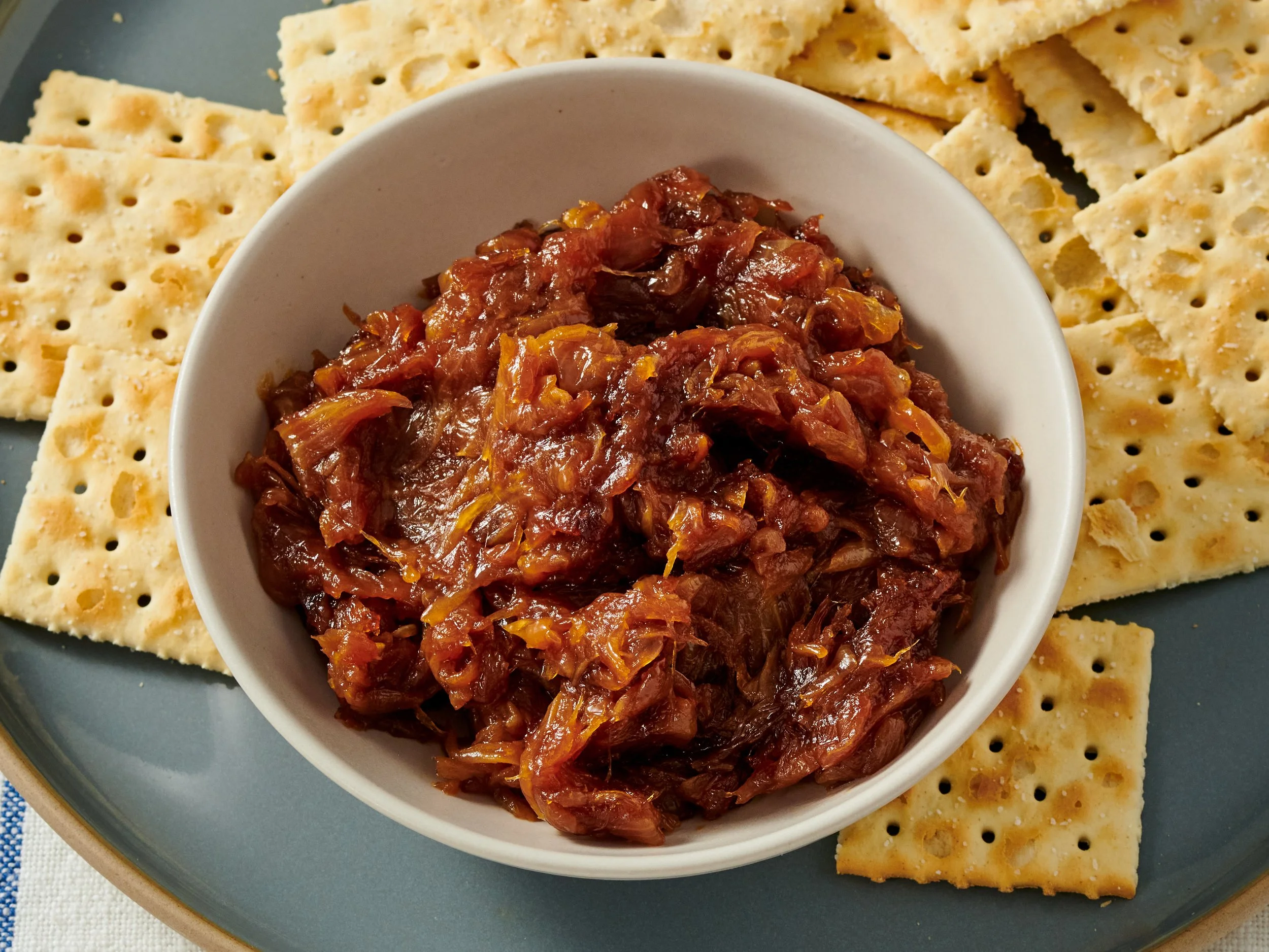
Caramelized onions served as a dip for crackers
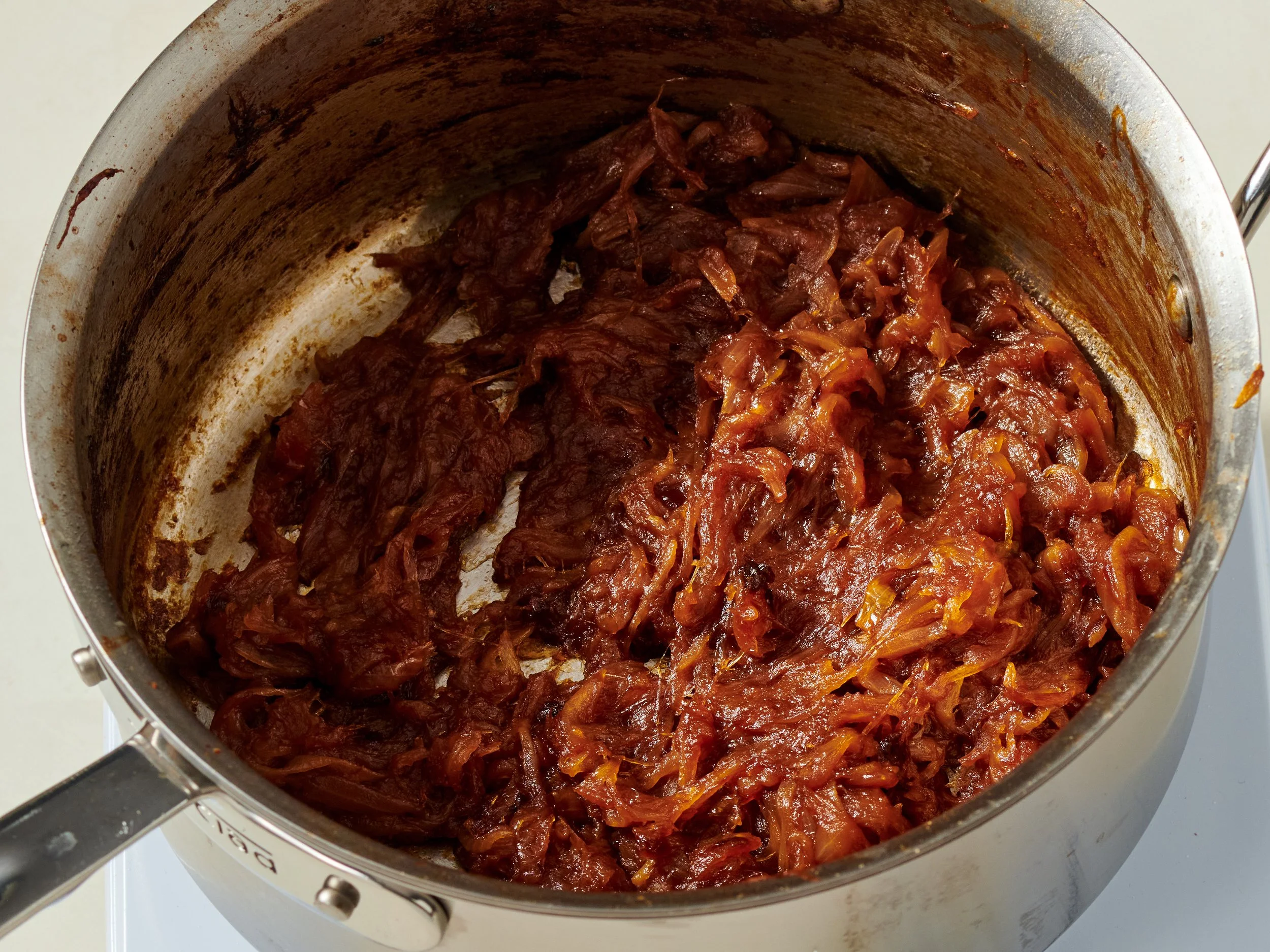
The process takes a little over an hour, but it’s well worth the effort.
Time: 1 hour to 1 hour 15 minutes
Ingredients:
3 large onions (about 2½ pounds total), yellow, white, or a mix
2 tablespoons clarified butter, neutral oil, beef fat, or other cooking fat
Fresh thyme, bay leaves, or other herbs, optional
Salt and freshly ground black pepper, to taste
Directions:
Melt the clarified butter in a heavy-bottomed saucepan or sauté pan over medium heat.
Increase the heat to high and add the onions. Cook, stirring occasionally, until the onions begin to release their liquid, turn translucent in the center, and become lightly golden around the edges.
Stir in a small pinch of salt. The onions will reduce considerably as they cook, so season lightly at this stage; you can always add more salt at the end. (See Notes)
Reduce the heat to low and cover the onions with a cartouche. Cook, stirring occasionally, until the onions are completely soft and evenly golden, about 20 minutes or longer depending on your heat level, pan, and the amount of onions you are cooking.
Remove the cartouche and increase the heat to medium. Cook, stirring frequently, as the onions begin to deepen in color. If the bottom or sides of the pan start to look dry or develop very dark caramelized spots, add about 1 tablespoon of water and scrape the pan well with a wooden spoon, incorporating the browned bits back into the onions.
Continue cooking, stirring frequently and scraping the sides of the pan as needed, until the onions are a deep amber brown, about 10 minutes more or as long as needed to reach the desired color.
Remove from the heat and season with salt and freshly ground black pepper to taste. Remove any herbs or bay leaves before serving
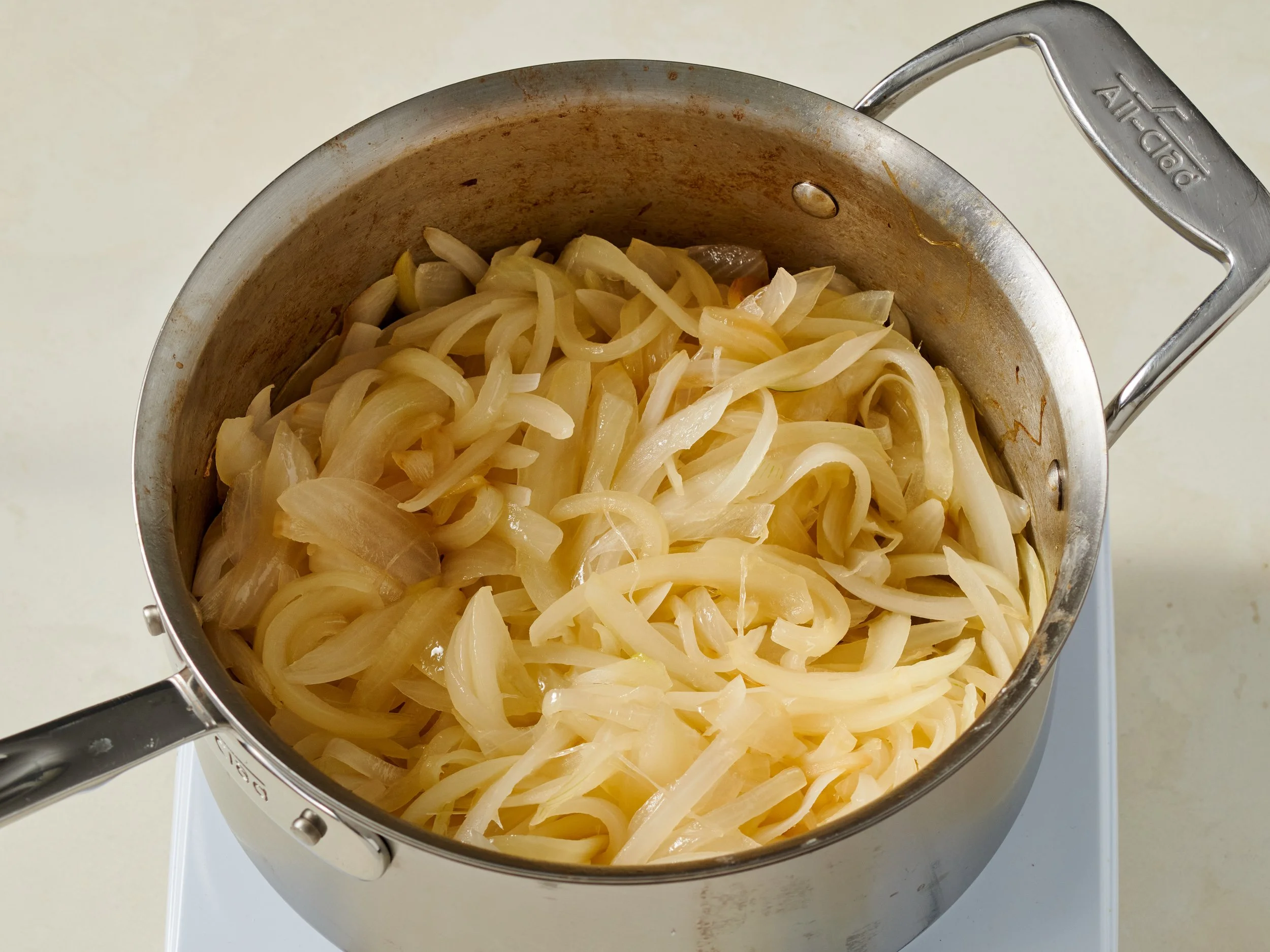
Onions are turning translucent, starting to release their liquid.
Now turn down the heat.
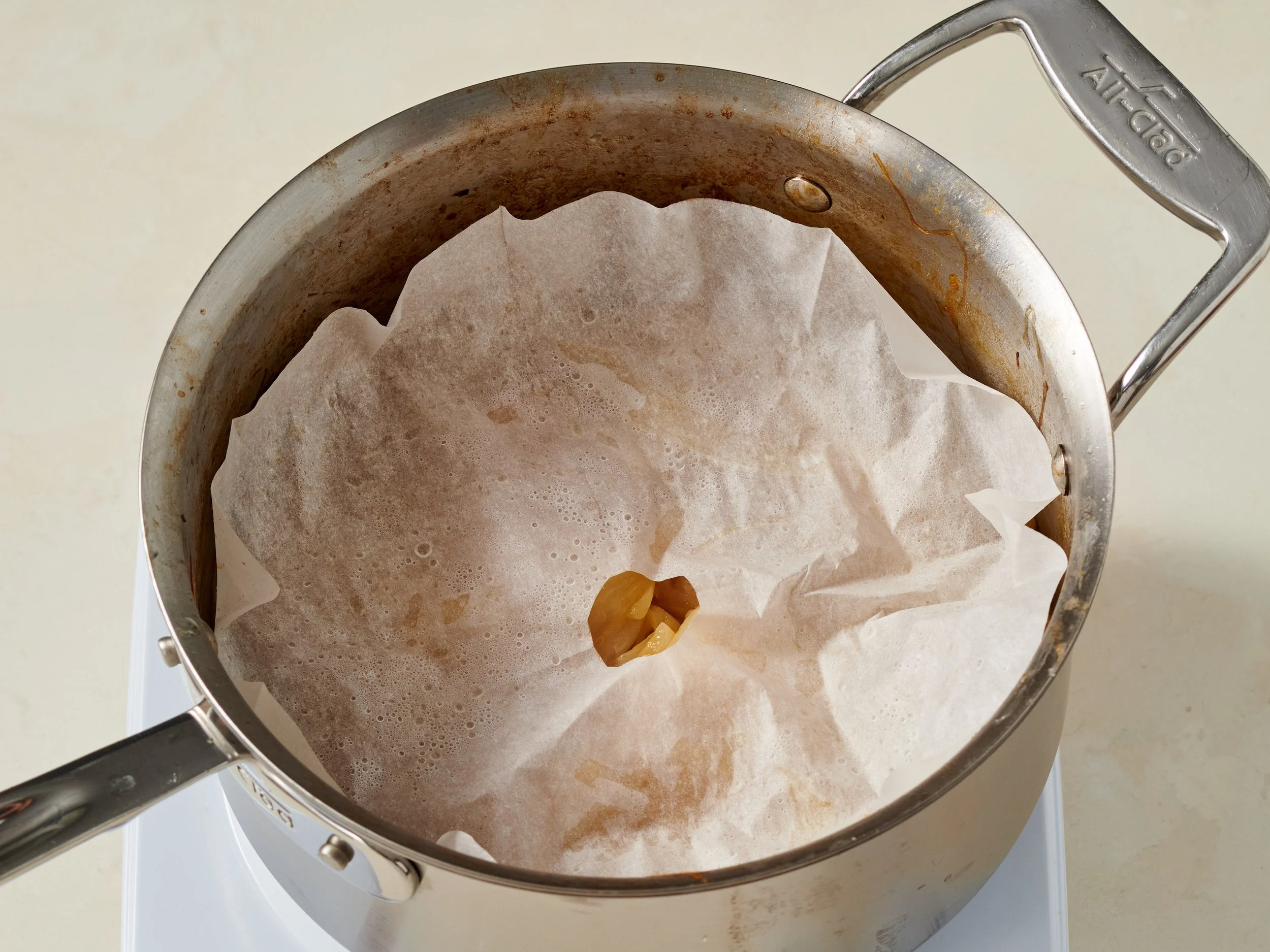
Cover with a cartouche.
The cartouche traps some of the moisture while allowing excess steam to escape. The onions will release a lot of liquid during this stage.
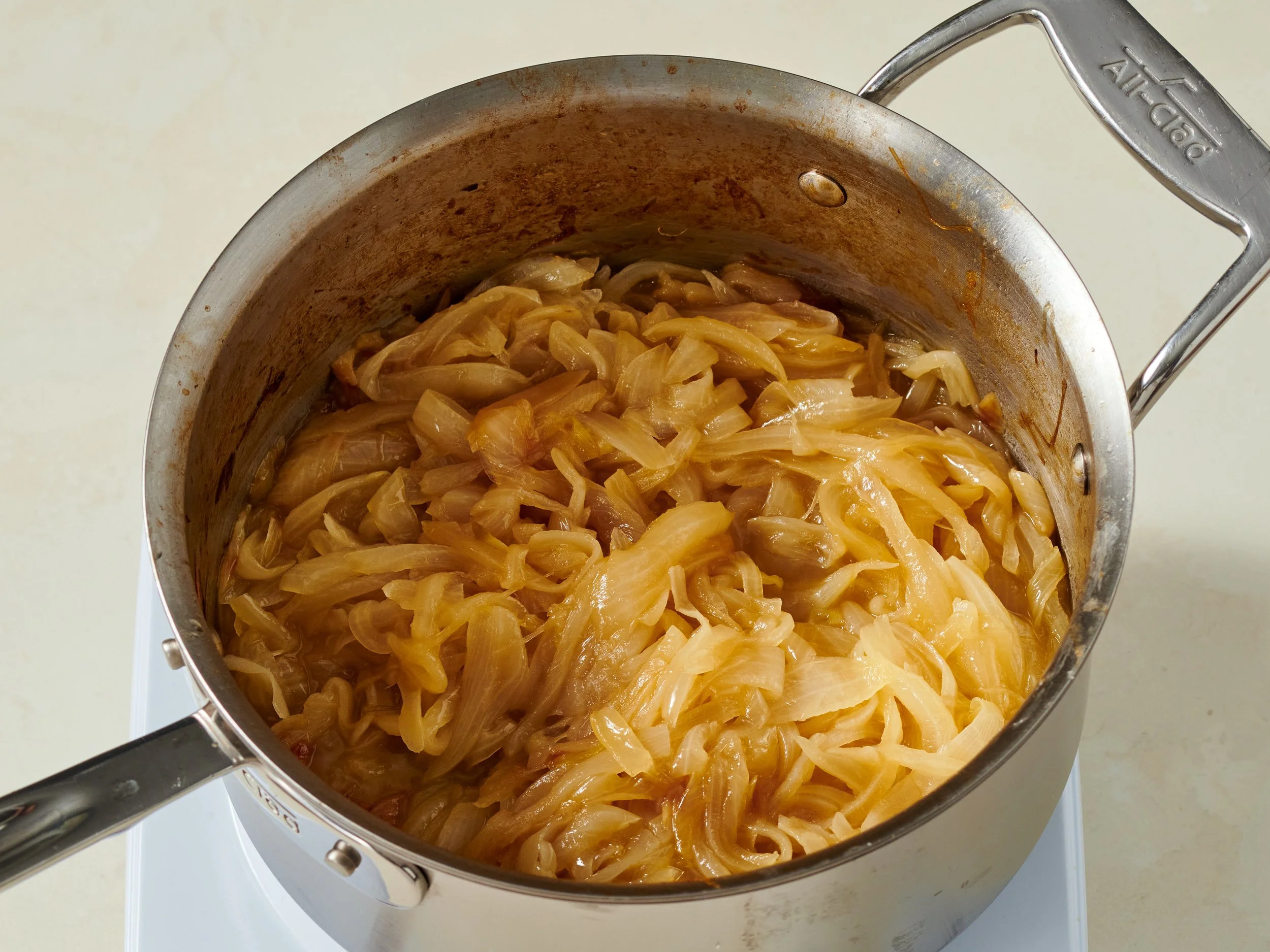
The onions are completely soft and beginning to deepen in color.
Remove the cartouche.
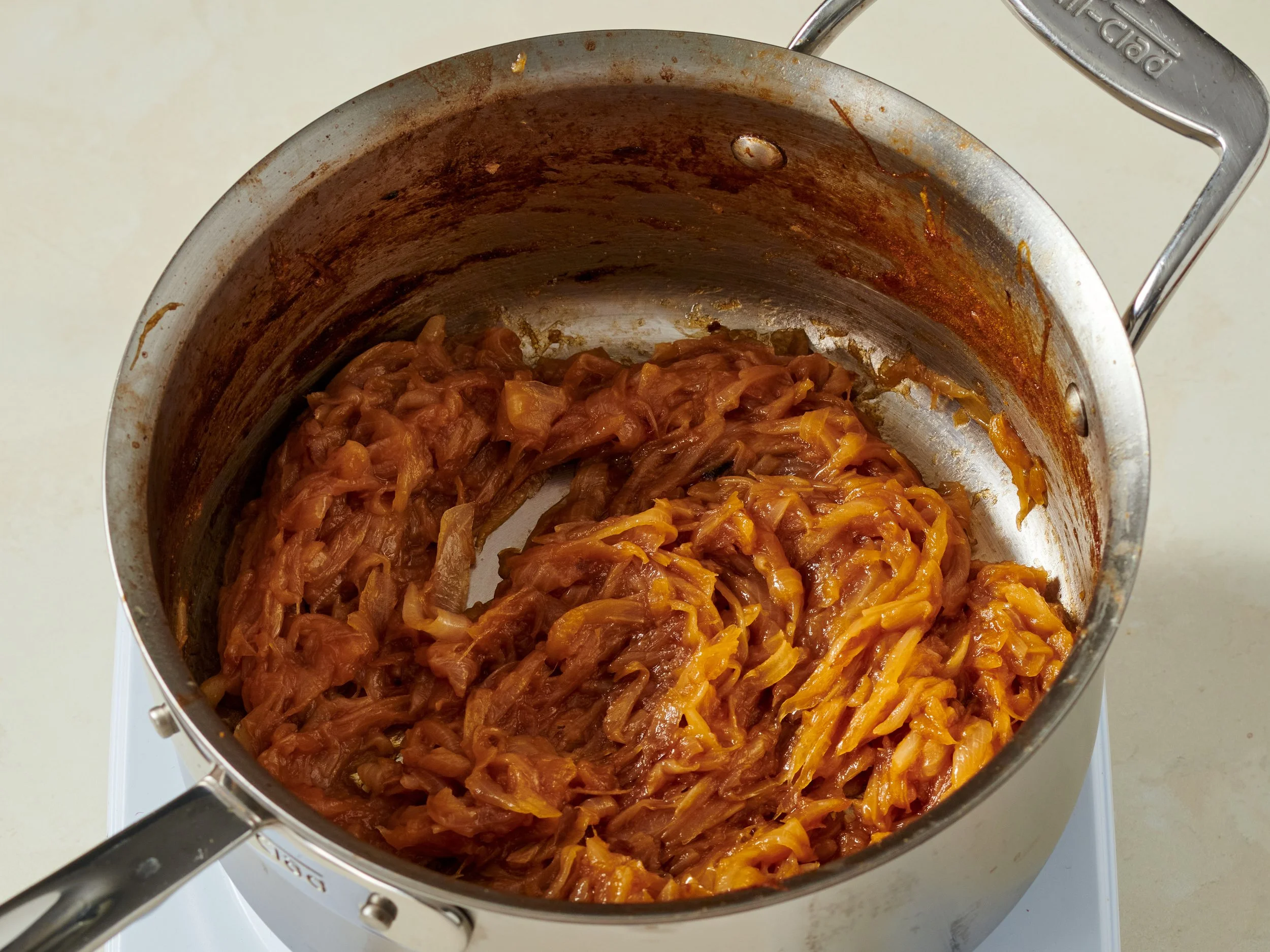
Continue cooking and scraping the sides.
Add 1 tablespoon of water as needed to loosen the dark caramelized spots, then scrape them into the onions.
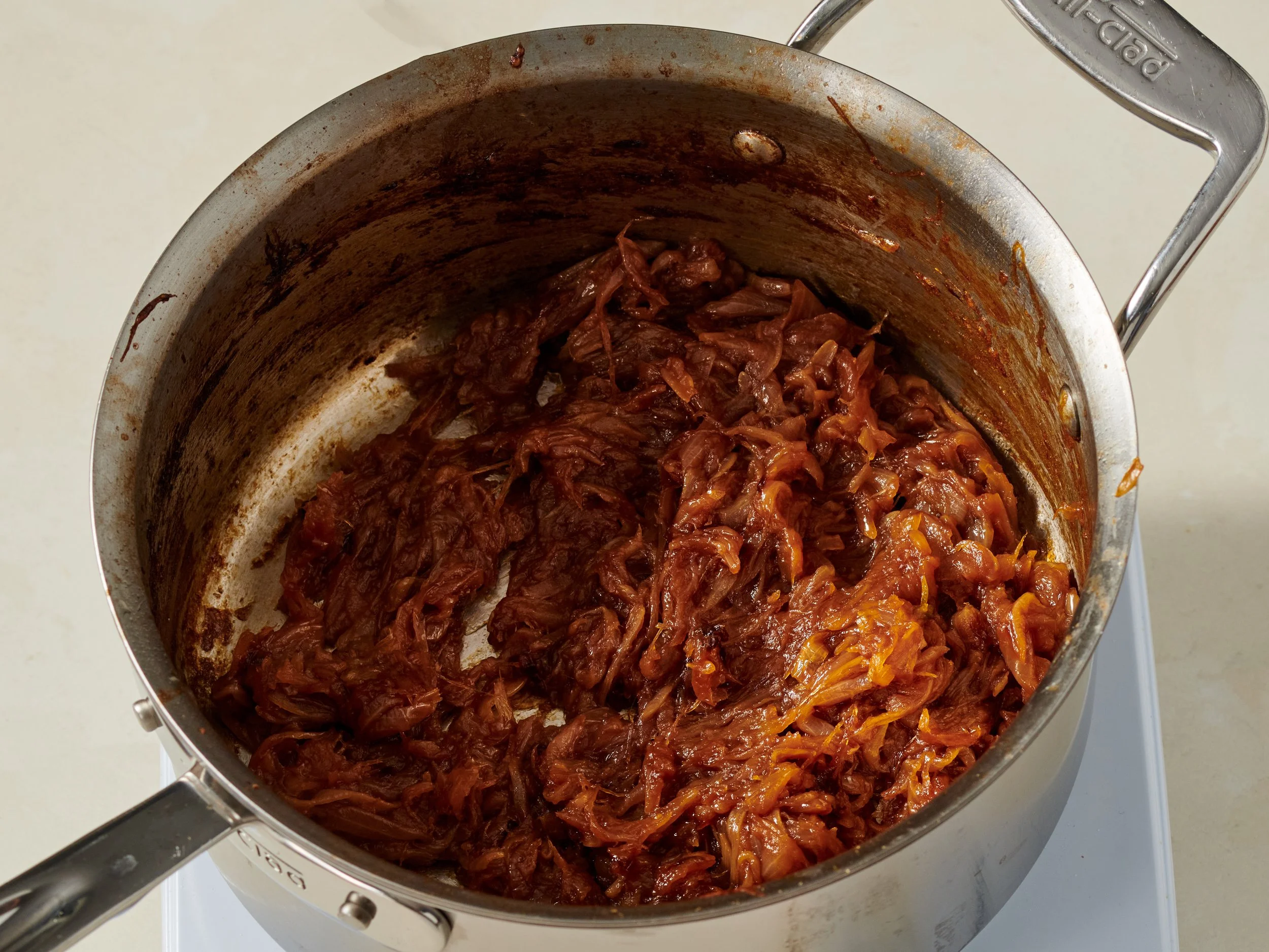
The onions are now a deep amber brown.
Remove from heat and season with salt and pepper to taste.
Notes:
On salt: A small amount of salt at the beginning helps the onions release moisture and soften. Season lightly, though, since the onions will reduce significantly as they cook and the salt will become more concentrated. Adjust the seasoning at the end.
On the cartouche: A cartouche helps trap some steam while still allowing moisture to escape around the edges. This encourages the onions to soften evenly and release their liquid without drying out too quickly.
I use deeply caramelized onions in sauces, dips, and soups, or simply eat them on their own. They are also wonderful folded into bread dough or used as a component in a grilled cheese sandwich.
