
Steamed King Crab
I’ve always enjoyed fresh shellfish, even as a kid. I especially love the mild sweetness of the meat. King crab is most commonly sold frozen, often processed and frozen soon after harvest, but if you can get your hands on a fresh one, steaming is my preferred way to cook it.
Since the crab sits above the water rather than in it, steaming helps preserve its natural sweetness and flavor, and I find it less cumbersome than boiling or blanching.
This is also how I like to prepare crab and lobster when the meat will be used in another dish. Once cooked, I can move on to roasting, gently poaching it in a flavorful liquid, or simply picking the meat for a salad.
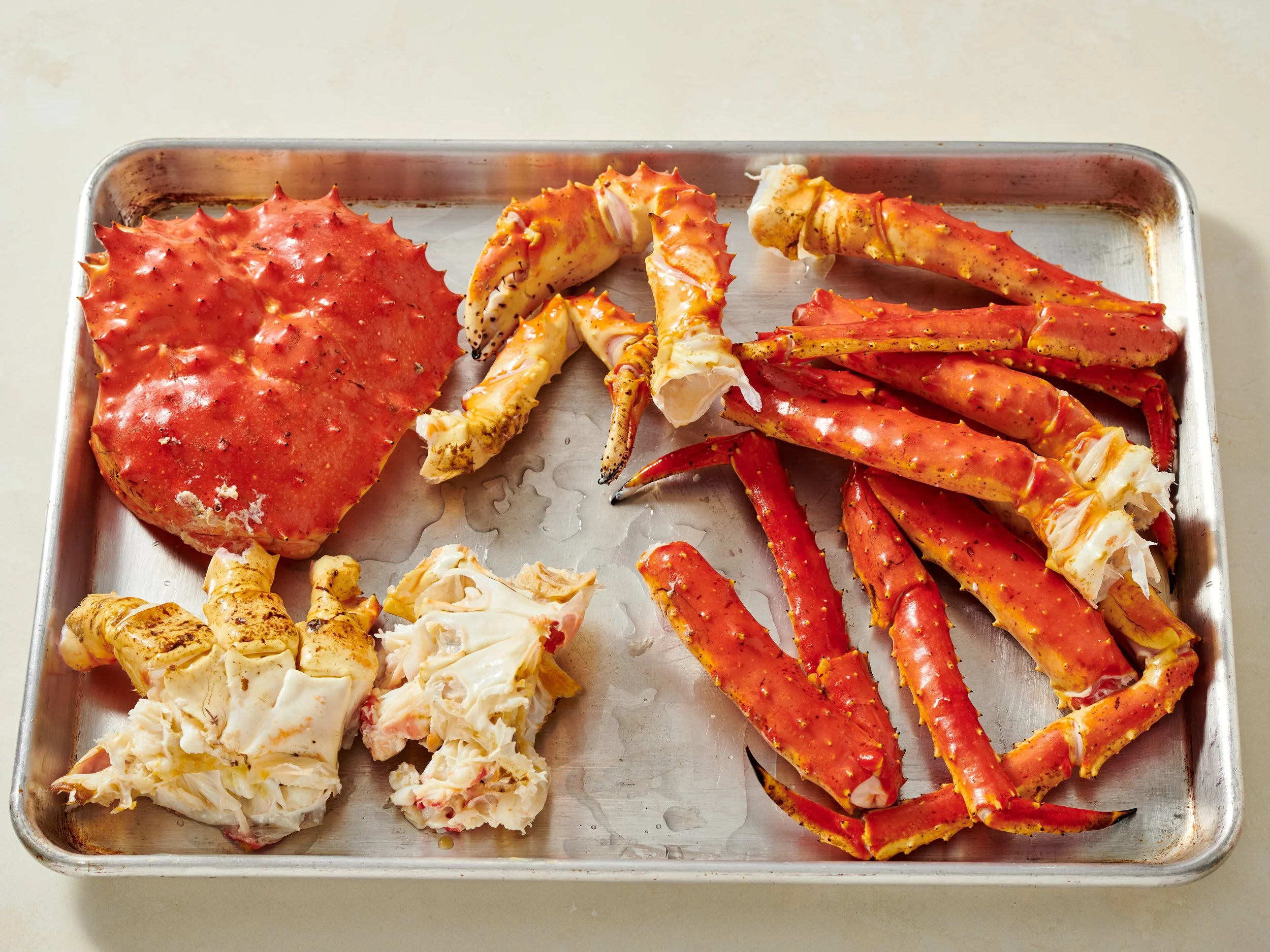
A whole steamed king crab, broken down into its shell, body, legs, and claws.
Ingredient:
1 live king crab, about 4 lb
Water as needed, for steaming
Directions:
Steamer set up: Set up a large steamer with at least 1 inch of water and bring the water to a boil.
Steam the crab: Once the crab has been prepared for cooking(See Notes), place it in the steamer basket and cover. Steam undisturbed for 20 minutes.
Cool the crab: Transfer the crab to a large tray and let it cool for about 20 minutes(See Notes), or until comfortable to handle, before breaking it down.
Break down the crab: Remove the top shell and discard the internal parts and gills. Break off the legs and claws, then separate the cleaned body into left and right halves. This can all be done by hand.
To break down the legs, hold each joint firmly and bend it back against the direction it naturally moves. As the joint separates, the thin inner cartilage will often pull out with it, and sometimes the meat will release in one whole piece. If the meat does not come out cleanly, or when opening the claws, use a pair of sharp kitchen shears to cut through the shell and remove the meat.
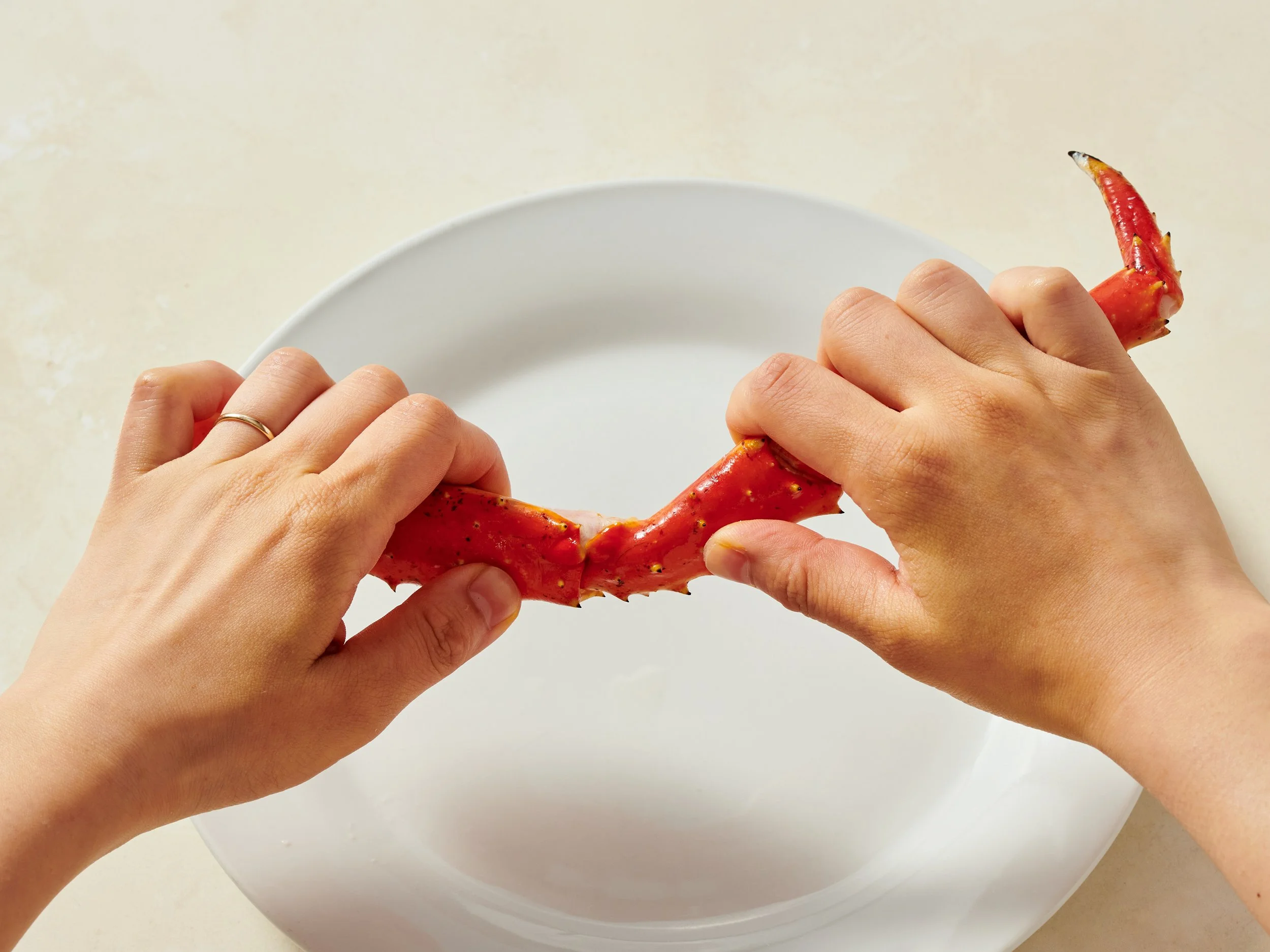
Bend the joint back against the direction it naturally moves to loosen.
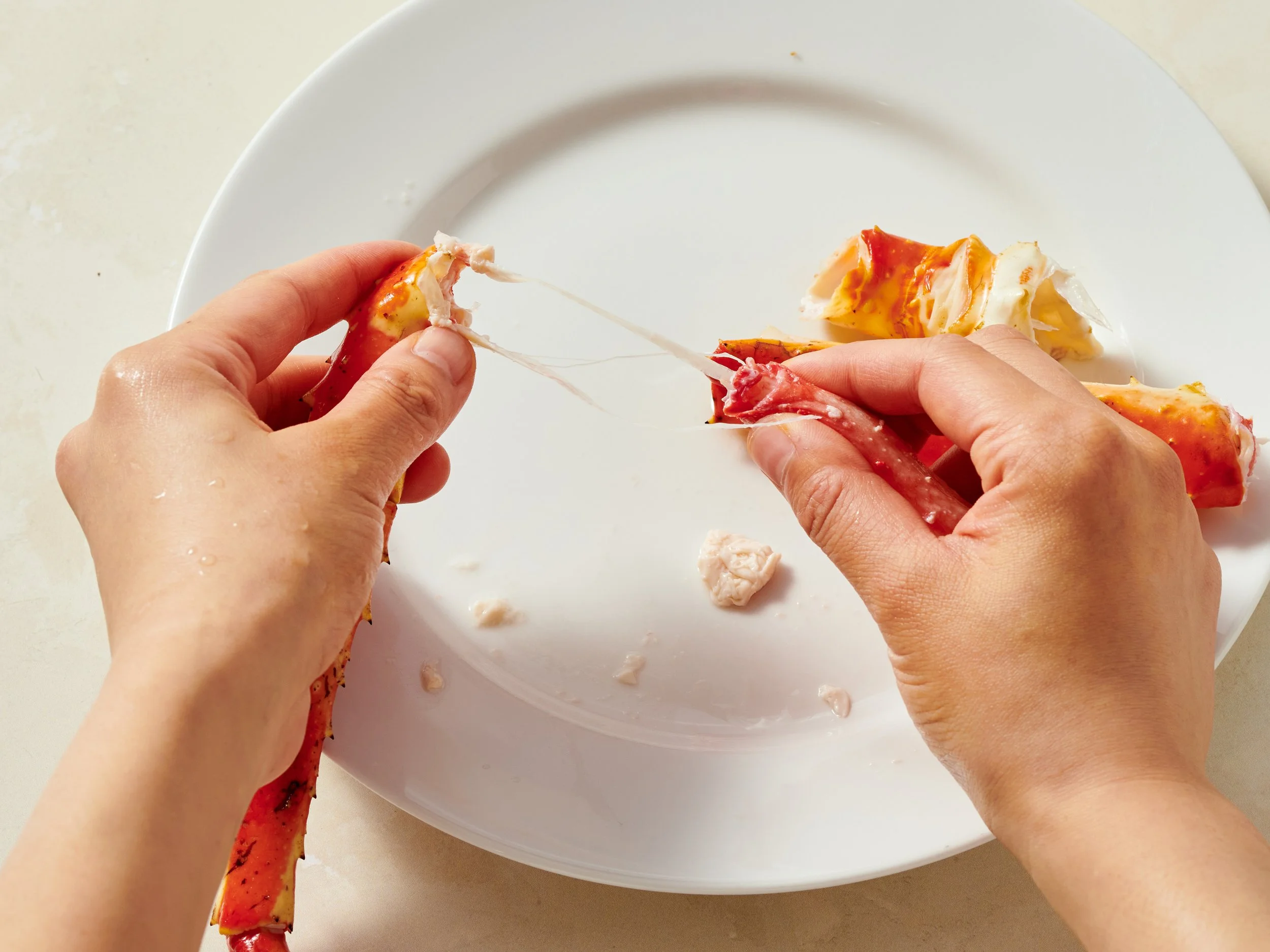
Pull the joint apart slowly. As the shell separates, the thin cartilage inside the leg will often pull out with it.
Notes:
Cooking time: Cooking time will vary depending on the size of the crab, the steamer, and how quickly your stove returns to a full steam after the crab is added. For a whole crab around 4 lb, about 20 minutes of steady steaming is a good starting point.
To check for doneness, insert an instant-read thermometer into the thickest section of meat, avoiding the shell. The crab should reach at least 145°F (63°C). The meat should also be fully opaque and firm rather than translucent or jelly-like. If needed, return the crab to the steamer for a few more minutes and check again.
Humane dispatching: If starting with a live crab, dispatch it humanely before cooking. If doing this yourself, use an appropriate humane method for live crustaceans, followed by two quick piercings from the underside to reach both main nerve centers. This keeps the upper shell intact for presentation. If you are unfamiliar with the technique, detailed visual guides and videos are available online.
