
Pickled Mustard Seeds
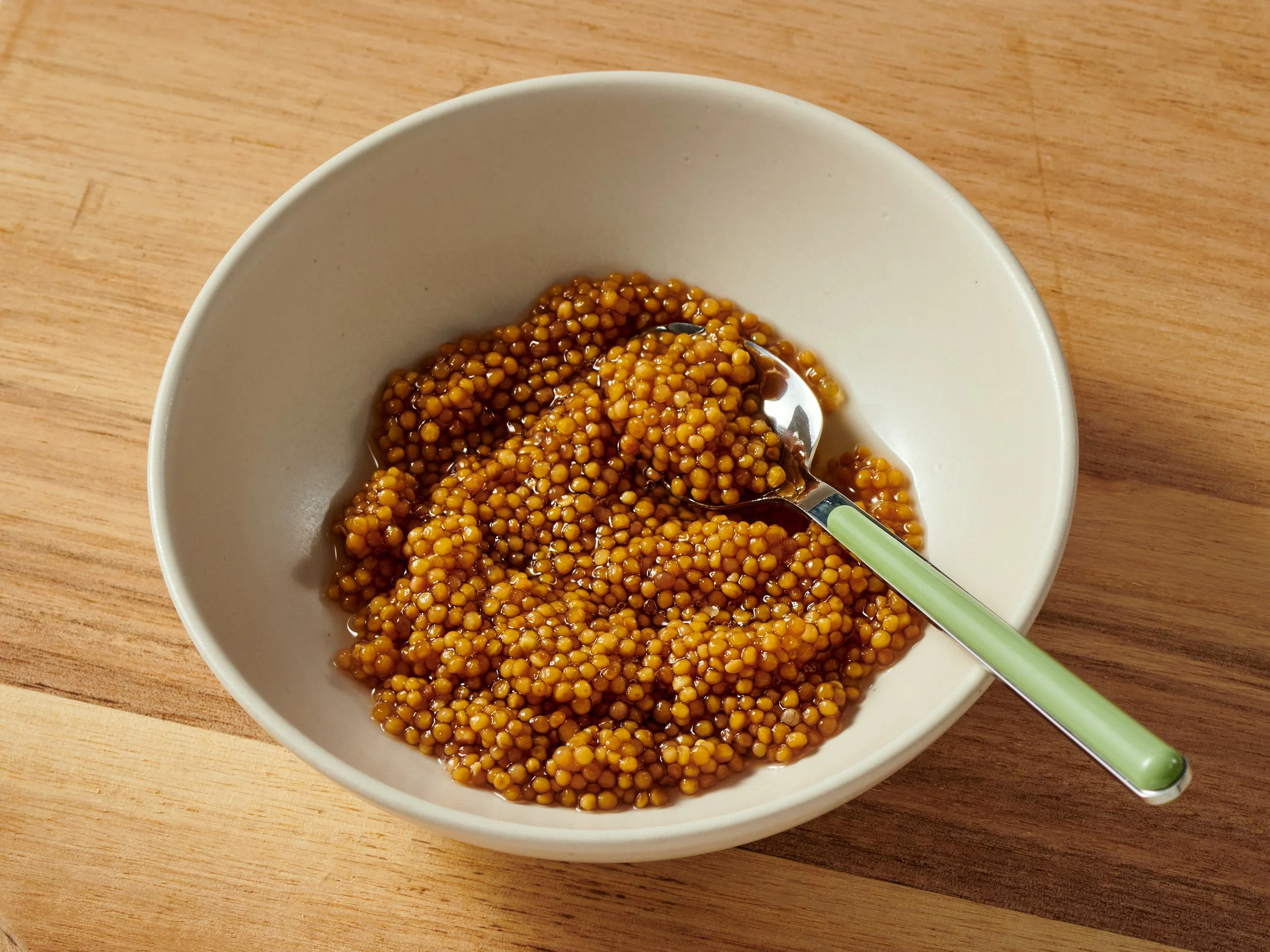
Pickled mustard seeds are a great garnish for all kinds of restaurant-style dishes. Once cooked, the seeds become plump and tender, with a fun, caviar-like texture that adds little pops of acidity and mustard flavor. My clients especially enjoy them stirred into cocktail sauce, where they add an unexpected bit of texture.
Many restaurant recipes blanch mustard seeds four or five times before pickling them to remove their bitterness. I prefer blanching them just twice. It softens the harsher edge while keeping more of that distinctive mustard flavor, and it makes the whole process much simpler.
Ingredients:
1 small jar mustard seeds
100 g water, plus more for blanching
50 g apple cider vinegar
25 g white wine vinegar
25 g sugar
Pinch of salt
Directions:
Place the mustard seeds in a small saucepan and cover with cold water by about 2 inches. Bring to a simmer over medium heat and simmer for 10 minutes. Drain through a fine-mesh strainer.
Return the mustard seeds to the saucepan, cover again with fresh cold water by about 2 inches, simmer for 10 minutes, then drain well.
Return the drained mustard seeds to the saucepan. Place the saucepan on a scale and add the 100 g water, apple cider vinegar, white wine vinegar, sugar, and salt.
Bring to a simmer over medium heat and cook, stirring occasionally, until most of the liquid has been absorbed and only enough remains to lightly coat the mustard seeds.
Let cool completely, then transfer to a clean container. Refrigerate for up to 3 weeks.
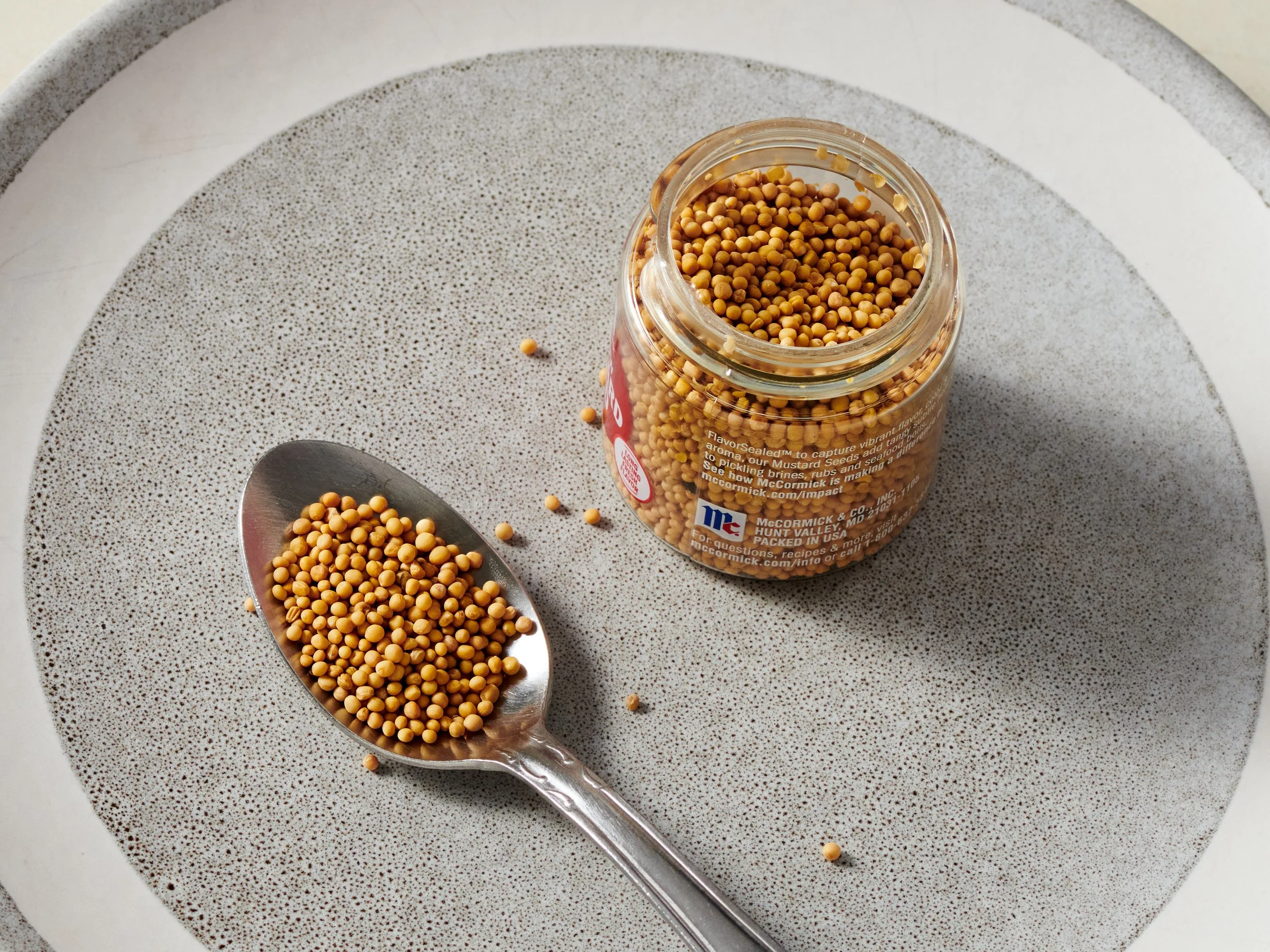
I’m using 1 small jar of mustard seeds.
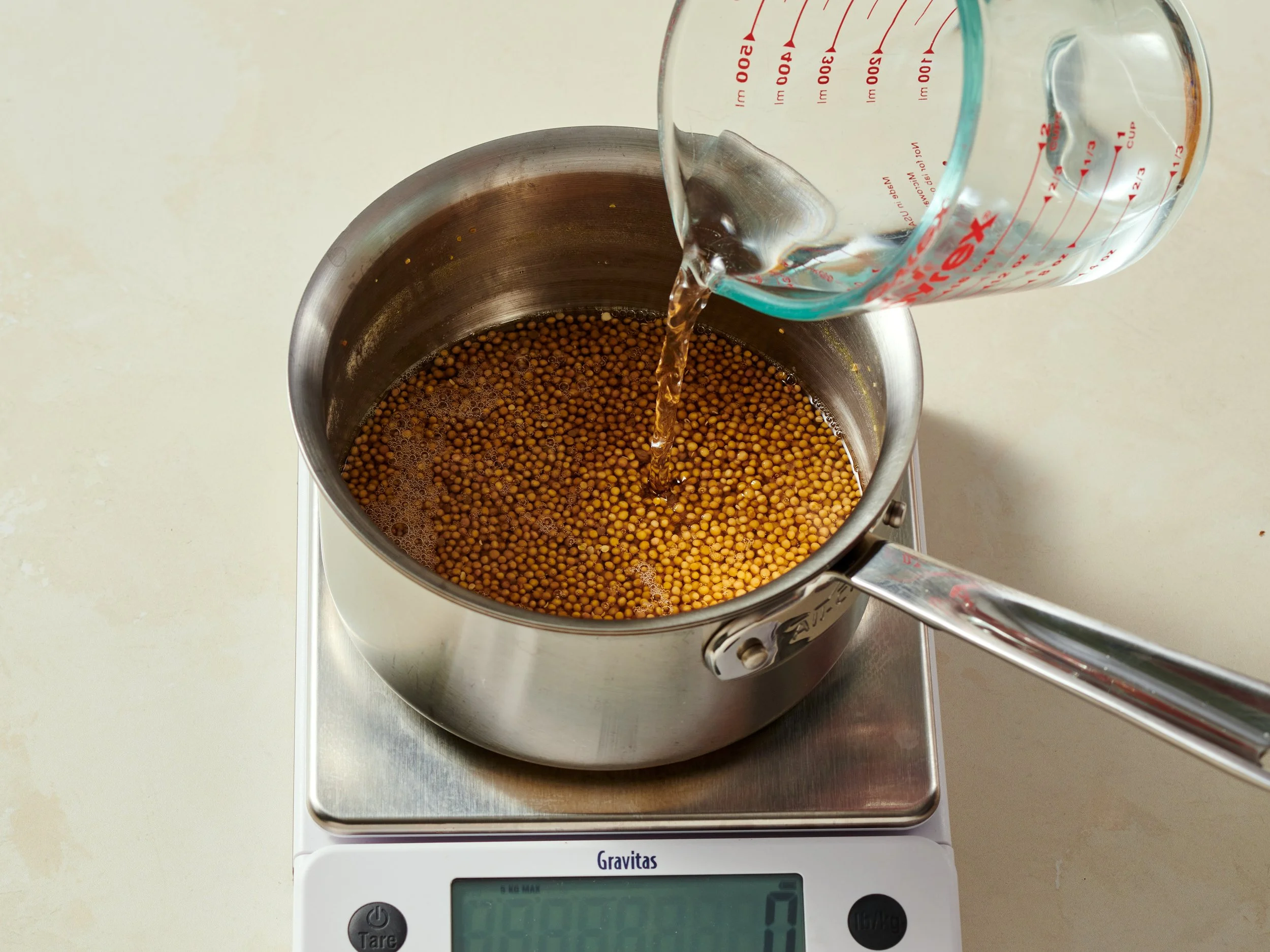
Place the blanched mustard seeds back in the pot and measure the pickling liquid ingredients directly into the pot.
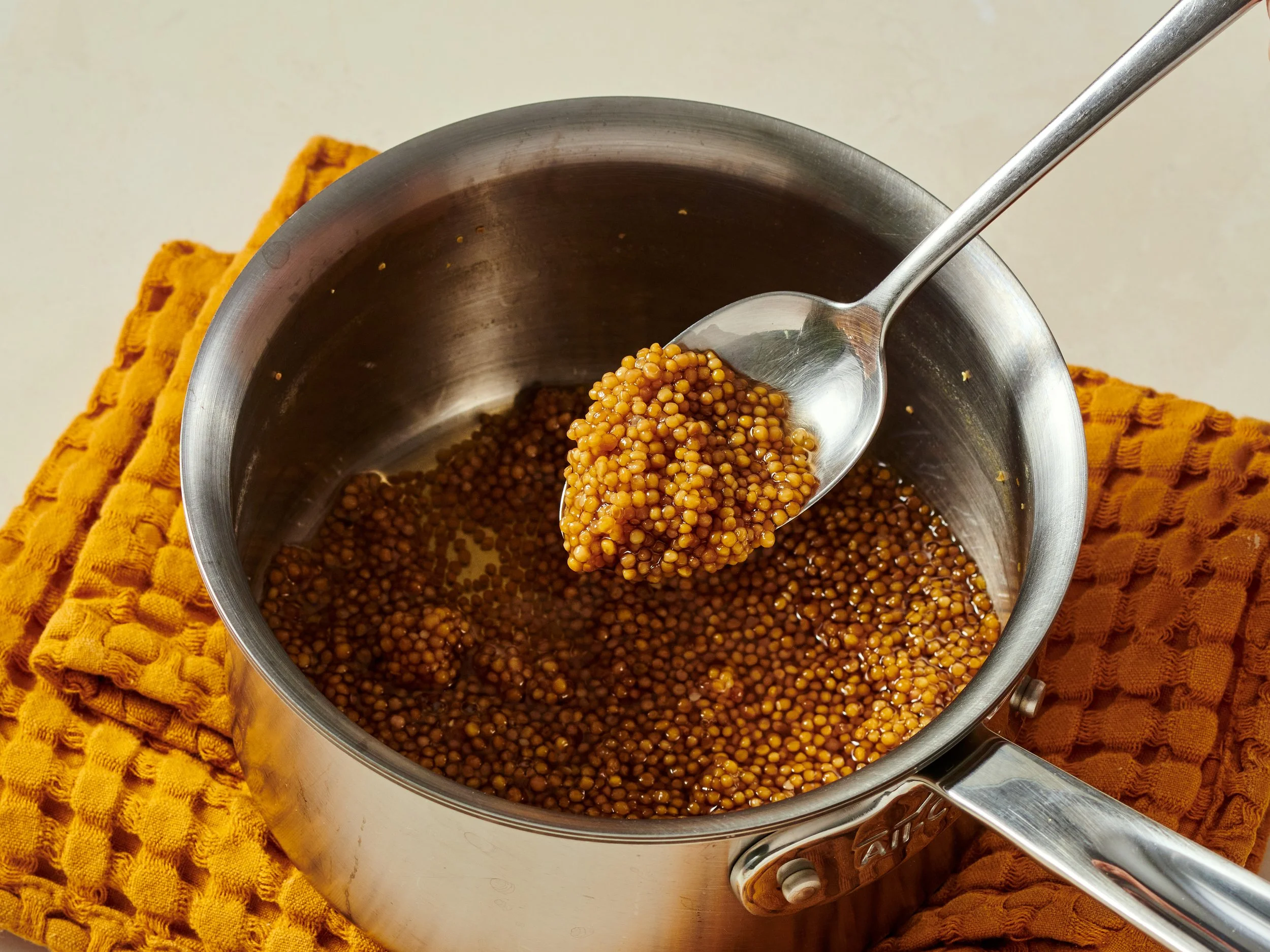
The mustard seeds should look plump and tender, with a little liquid still surrounding them.
Notes:
The mustard seeds will continue to absorb a little of the pickling liquid as they cool, so stop cooking while they are still slightly loose and glossy rather than completely dry.
Two rounds of blanching leave a noticeable mustard flavor and a slight bitterness. For a milder result, blanch the seeds one or two additional times before adding the pickling liquid.
The finished seeds should be plump and tender with a caviar-like pop, with just enough liquid to keep them moist.
If making a larger batch, you may not need to increase the pickling liquid by the same proportion as the mustard seeds. A larger volume will evaporate more slowly, so start with a little less liquid and add more as needed.
