
Restaurant-Style Three Cup Chicken
I first had three cup chicken at a packed restaurant in Beijing with my parents, and I fell in love with it immediately. For years, I tried different recipes to recreate that version, but the flavor and texture were never quite right.
What finally made the difference was frying the chicken and garlic before finishing everything in the sauce. The goal here is not a super-crispy exterior - as with many Chinese dishes, the fried surface is meant to absorb the sauce and soften slightly. The chicken stays tender, the skin soaks up the glossy basil sauce, and the garlic and ginger become almost as good as the chicken itself (which, according to my mom, is the best part anyway).
This is the version I remember from Beijing, adapted with ingredients that are easy to find here in the U.S.
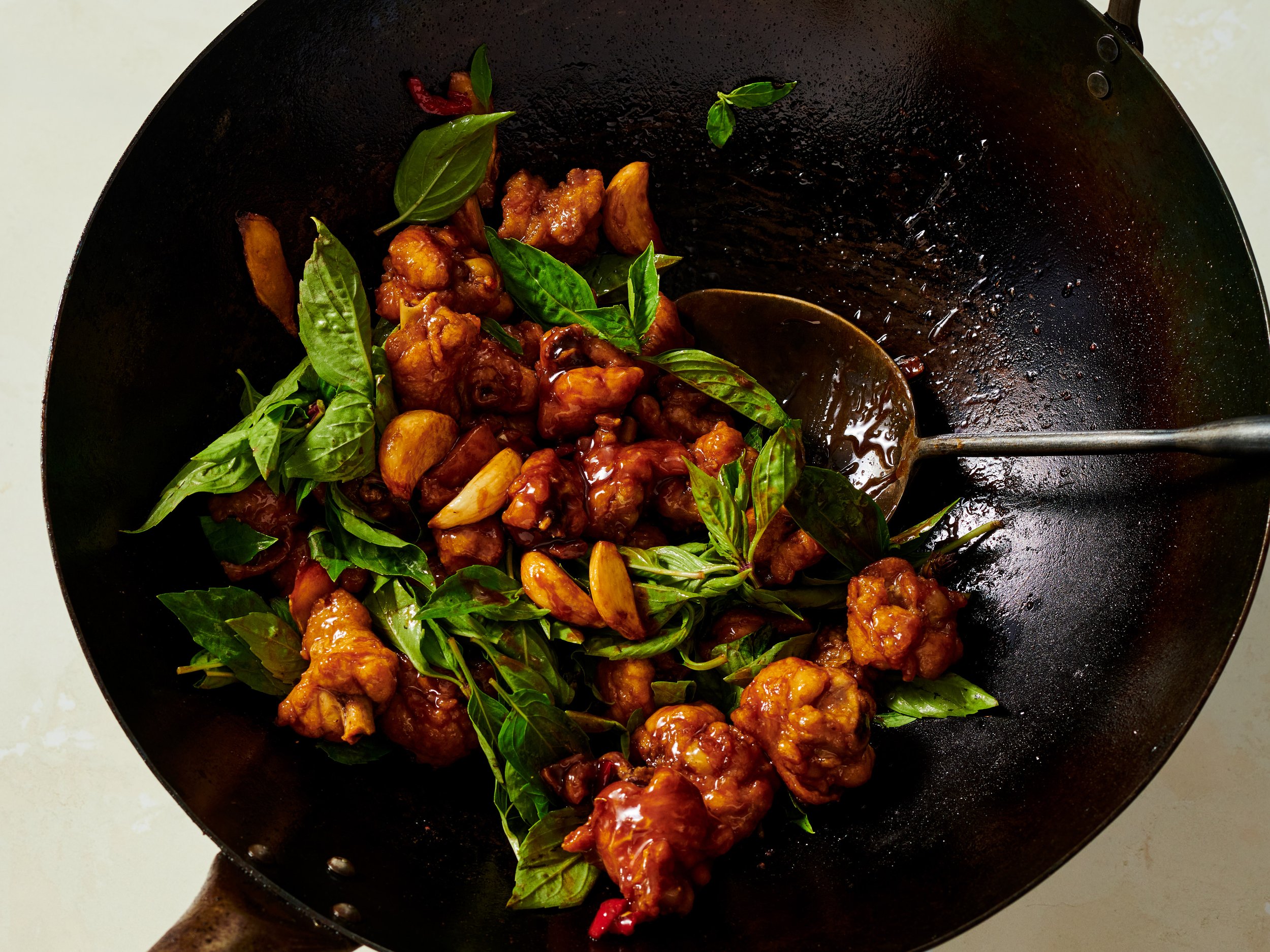
Thai basil is added at the very end, just long enough to wilt into the glossy sauce and release its flavor, which is essential to the dish.
Ingredients:
Chicken and Marinade:
1.2 lb skin-on, bone-in chicken wings, chopped through the bone into roughly 1-inch pieces (See Notes)
1/4 teaspoon sea salt
1 tablespoon sake
3 tablespoons cornstarch
Aromatics:
80 to 100 g whole peeled garlic cloves, about 15 to 18 medium cloves, lightly smashed
1 1/2-inch piece fresh ginger, peeled and thinly sliced
1 teaspoon thinly sliced red chile, such as Fresno (See Notes)
1/2 cup packed Thai basil leaves and tender stems
Neutral oil, for frying
Sauce:
60 g sake
22 g light soy sauce
5 g dark soy sauce
15 g granulated sugar
30 g chicken stock or water, plus more as needed
17 g sesame oil
Sea salt, to taste
Cornstarch Slurry:
1/2 teaspoon cornstarch
1 tablespoon water
Directions:
Marinate the chicken: Combine the chicken with the sea salt and sake and mix well. Marinate for 15 minutes. Add the cornstarch and toss until the chicken is evenly coated.
Fry the garlic: Heat enough neutral oil to submerge the garlic to 325°F (165°C). Add the garlic cloves and fry gently for about 2 minutes, until evenly golden and beginning to float. Remove with a slotted spoon and set aside.
Fry the chicken: Increase the oil temperature to 375°F (190°C). Working in batches, fry the chicken for about 3 minutes, until lightly golden and partially cooked. Transfer to a plate. Increase the oil temperature to 400°F (205°C), then fry the chicken a second time in batches until golden brown, about 1 minute per batch.
Carefully pour off the frying oil, leaving about 2 tablespoons in the pan. Reduce the heat to low. Add the ginger and cook until fragrant and golden around the edges. Add the chile, fried garlic, and chicken and toss briefly.
Add the sake, light soy sauce, dark soy sauce, sugar, chicken stock, and sesame oil. Bring to a boil and cook for about 1 minute, stirring and turning the chicken so the pieces are evenly coated.
Stir together the cornstarch and water. Drizzle the slurry into the pan while stirring. Continue to simmer and toss until the sauce becomes glossy and coats the chicken. If the sauce becomes too thick, add 1 to 2 tablespoons additional chicken stock as needed. Taste and season with sea salt.
Add the Thai basil and toss for about 1 minute, just until the leaves and tender stems are wilted and their flavor has infused the sauce. Serve immediately.
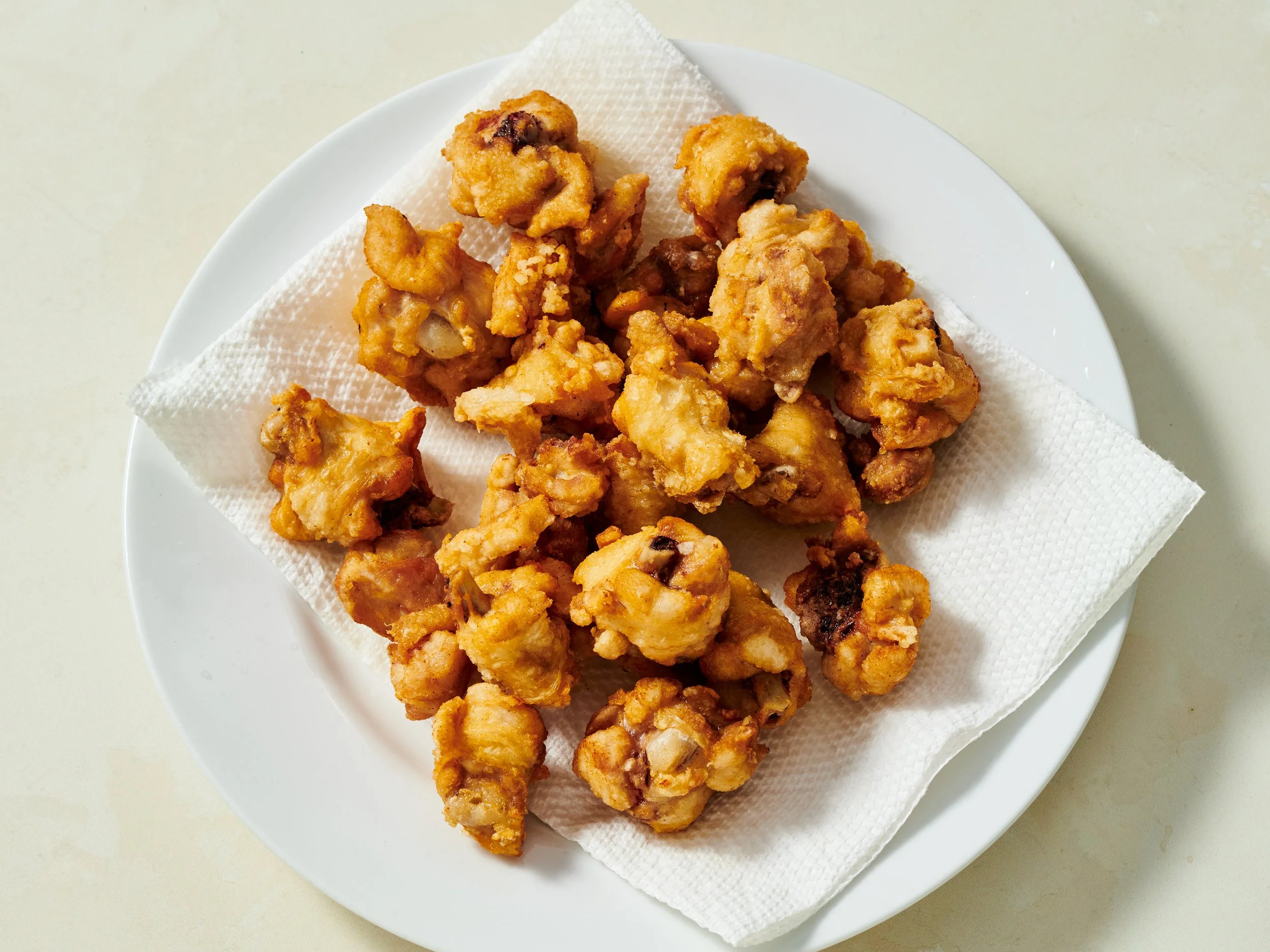
Chicken pieces fried until golden brown.
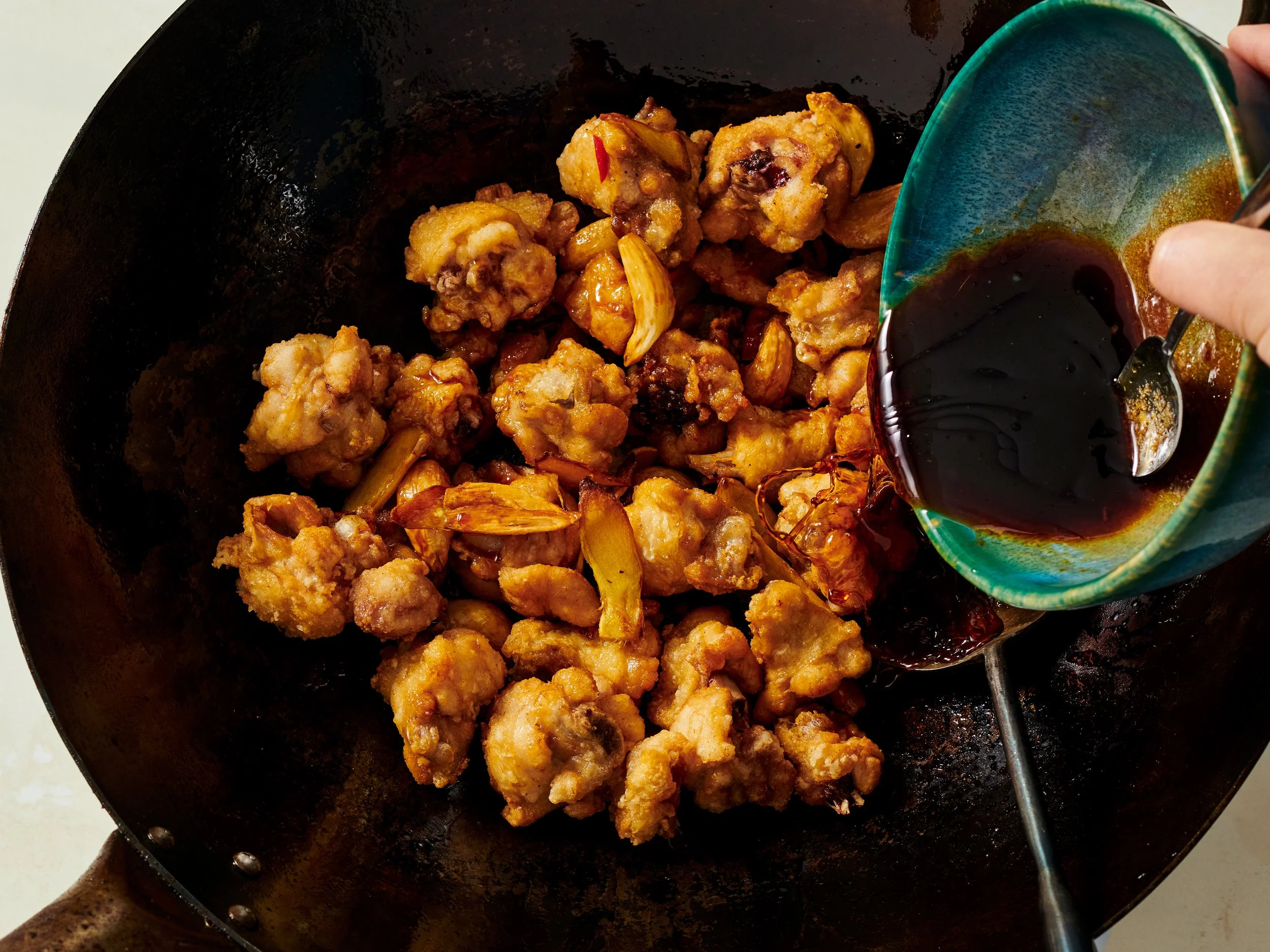
Measure the sauce ingredients into a small bowl, then pour them into the pan.
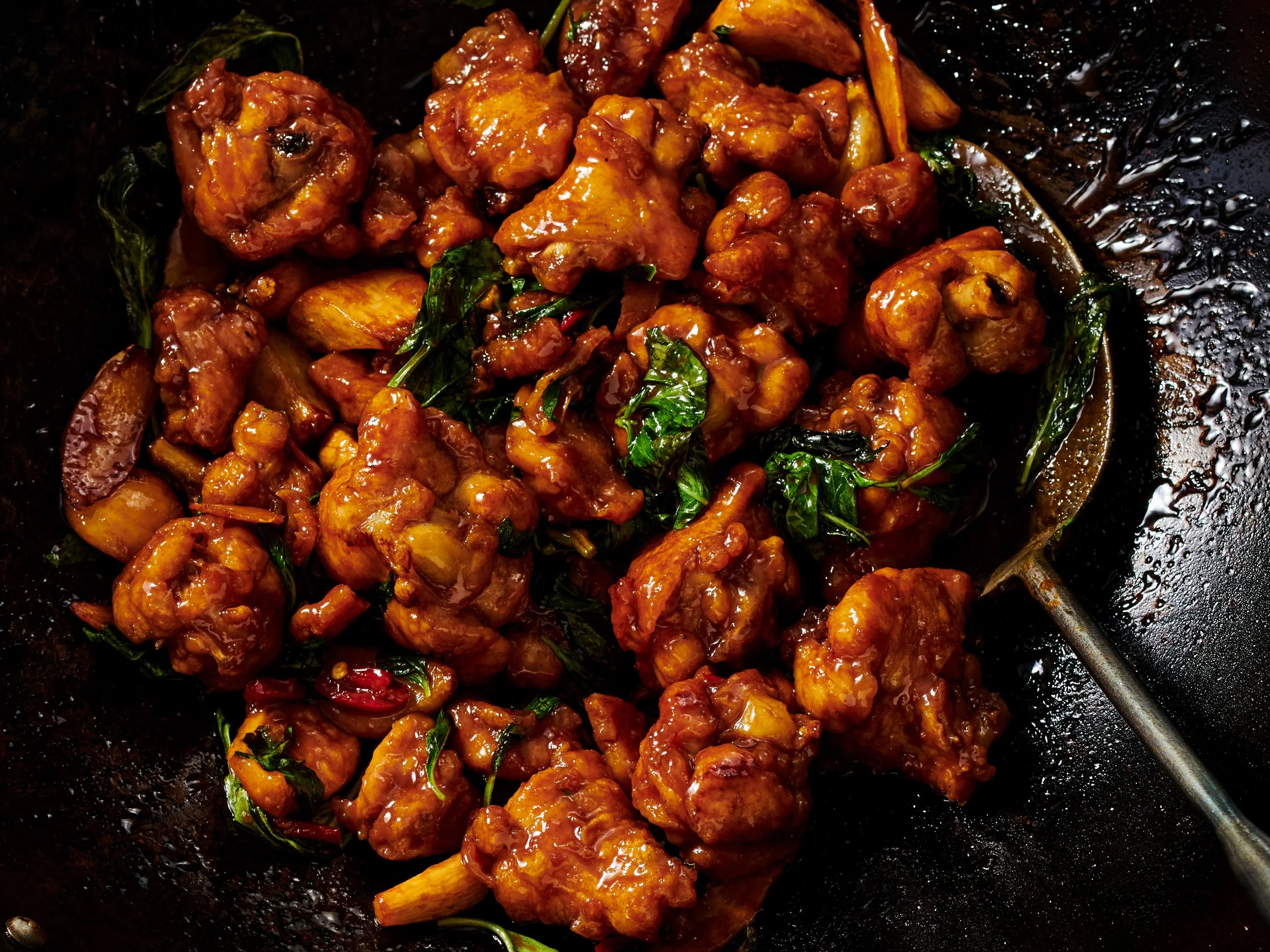
The basil will wilt and darken as it cooks into the sauce.
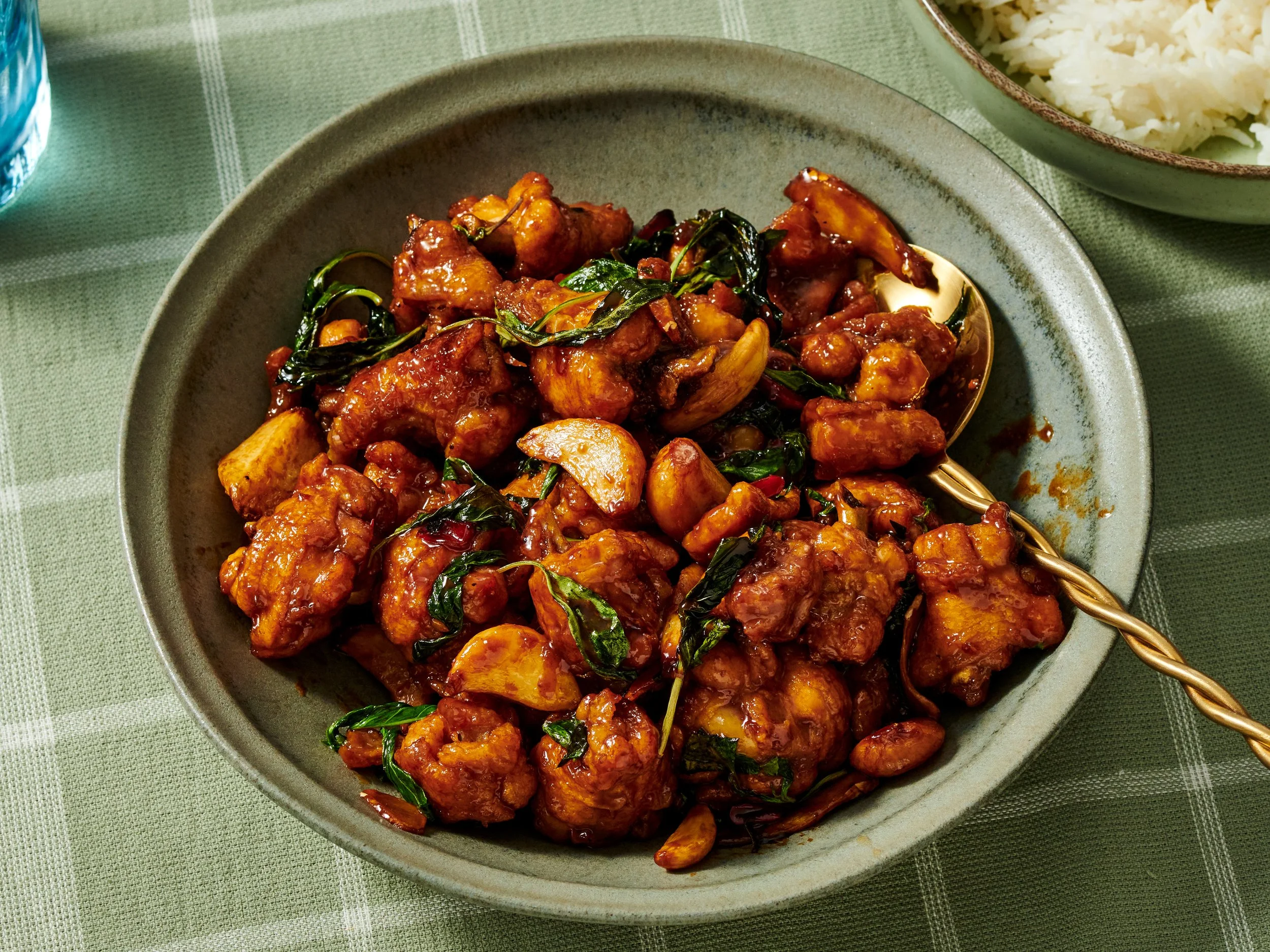
This dish does not have a lot of extra sauce compared with some stir-fries, but the sauce is concentrated and flavorful enough that it is still usually served with rice.
Notes
Bone-in chicken pieces: The bones in the chicken pieces help protect the meat from overcooking during the double-frying process, keeping it tender and juicy. If using boneless chicken, use a dredge or reduce the frying time accordingly.
Fried chicken texture: The chicken is not meant to stay extremely crisp. The fried exterior softens slightly as it absorbs the glossy sauce, which is part of the texture of this style of dish.
About chiles: I prefer Fresno chile here rather than Thai chile. Thai chiles are beautifully red, but I find their heat too aggressive for this kind of preparation and it can distract from the flavor of the sauce. Fresno chile adds color and a gentle warmth without taking over.
